How to Tell If a Used Car Has Been in an Accident (Even If the Report Is Clean)
The seller says the car’s never been in an accident. The history report agrees. And the car looks great in the driveway. None of that means the car hasn’t been hit.
Plenty of accidents never make it into any database. A fender bender paid in cash, a repair done at a friend’s shop, a claim that never got filed. The damage still happened. It just didn’t leave a paper trail.
The good news is that repaired damage almost always leaves physical clues. Here’s where to look, what each sign means, and when it’s time to get a professional opinion.
Why a history report isn’t enough
A vehicle history report only shows what someone reported. If the owner paid out of pocket and the shop didn’t share the record, the report can come back completely clean on a car that had a front-end rebuild last year.
That doesn’t make the report useless. It’s still the best way to catch title problems, odometer issues and documented crashes. It just answers a different question than the car itself does. We break that down in Carfax vs. Physical Inspection: What Each One Actually Tells You.
7 signs a used car has been in an accident
Check these in daylight, on level ground, with the car clean. Rain, dirt and dim parking garages hide almost everything on this list.
1. Uneven panel gaps
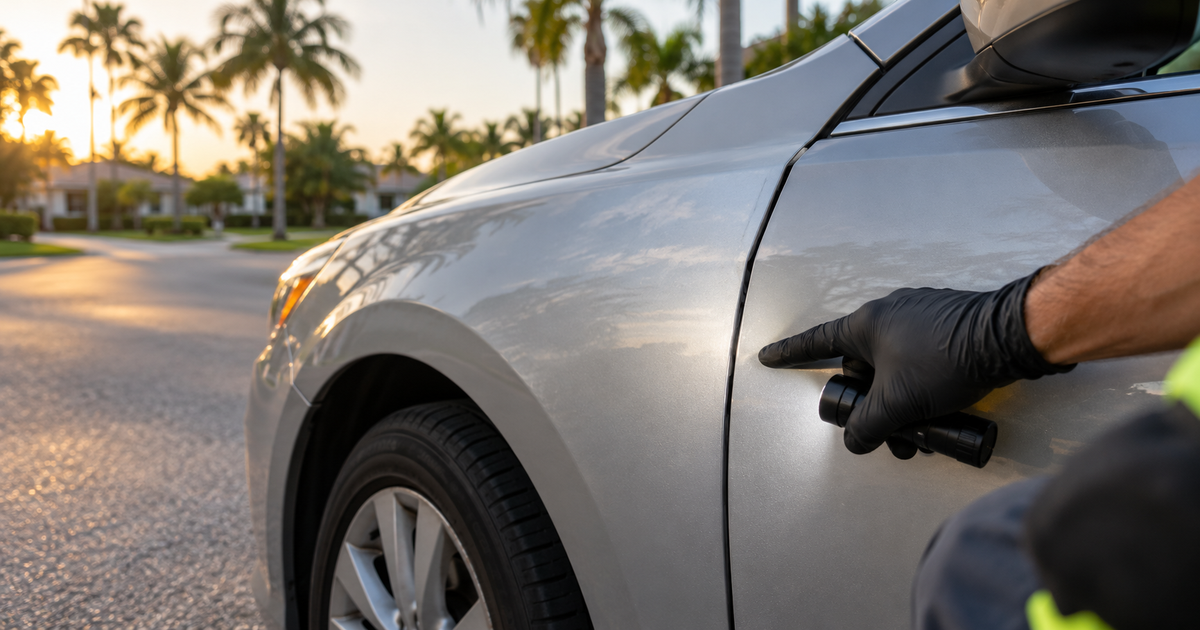
Look at the spaces between the hood and fenders, the doors and the body, the trunk and the quarter panels. From the factory, those gaps are tight and even on both sides of the car. If one side is wider, or a gap gets wider from top to bottom, that panel was probably removed, replaced or pushed out of place.
2. Paint that doesn’t quite match
Stand at the corner of the car and look down its side at an angle. Repainted panels often show a slightly different shade, a different gloss or a texture that looks like the skin of an orange. Also check the edges: paint on rubber seals, window trim or plastic moldings is a giveaway that someone painted without masking properly.
3. Tool marks on bolts
Open the hood and the doors and look at the bolts that hold the fenders, hood hinges and doors in place. Factory bolts usually have intact paint on top. Scratched paint or wrench marks on those bolts tell you the part was taken off at some point.
4. Headlights and glass that don’t match
Headlights age together. If one is crystal clear and the other is hazy and yellowed, the clear one is likely new, and that usually means front-end damage. The same idea applies to glass. Every window has a small manufacturer label in the corner. If one window’s label is different from the rest, that glass was replaced.
5. Signs of repair in the trunk and door jambs
Lift the trunk carpet and look at the floor. Wrinkles in the metal, fresh paint or sealer that looks messy compared to the rest of the car can point to rear damage. Do the same in the door jambs and around the hood opening, looking at the metal structure. Factory seams are clean and uniform. Repair seams usually aren’t.
6. Warning lights and stored codes
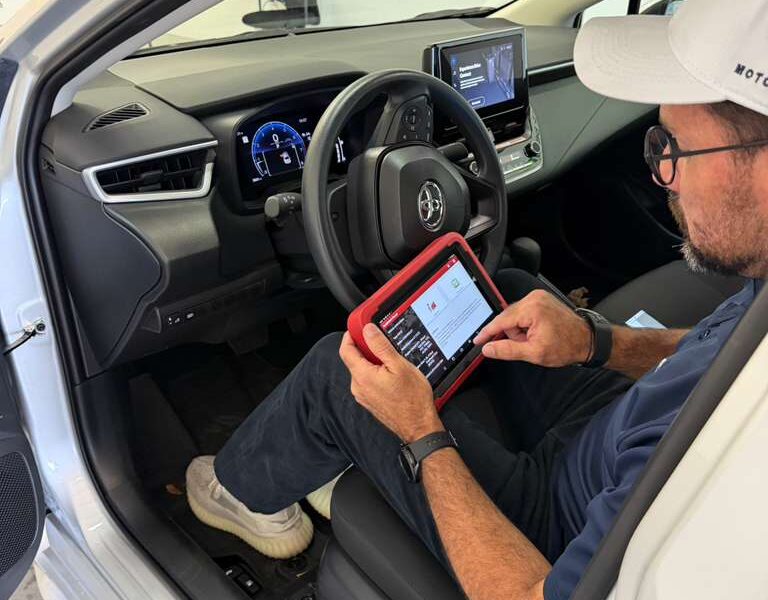
Turn the key to ON without starting the car. Every warning light should come on briefly, including the airbag light. If the airbag light never comes on, or stays on, that’s a serious red flag after a collision. Stored fault codes in the electronic modules can also point to past damage, even when no light is showing on the dash.
7. Tires wearing unevenly
A hard impact can knock the car’s geometry out of line. Look at the tread across all four tires. If one tire is wearing much faster on the inside or outside edge than the others, it can be a sign the car took a hit on that corner.
Not every repair is a deal breaker
Finding signs of a past accident doesn’t mean you should walk away. A properly repaired bumper or a replaced door can be perfectly fine. What matters is how bad the damage was and how well it was fixed.
The real problems are structural damage that was patched instead of repaired, and repairs done to look good rather than to hold up. Those are also the hardest things for a buyer to judge in a driveway.
Either way, damage you find is leverage. If the seller said “no accidents” and you find a repainted fender, you have a reason to ask questions, and a reason to negotiate.
When to get a professional inspection
You can spot a lot with the list above. What’s hard to judge on your own is the structure underneath, the quality of a repair, and electronic faults that were cleared before you arrived.
That’s what a pre-purchase car inspection in Orlando is for. A MotorCheck inspection documents the car’s structural and panel condition with a full structural damage map, checks paint and bodywork, scans the electronic modules with an OBD2 tool, and verifies the VIN, electrical accessories, tires and glass. The vehicle’s Carfax history report is included, so you see the documented past and the car’s real condition in one report, before you sign anything.
To be clear about scope: our inspection doesn’t evaluate the engine, transmission, brakes or suspension. If you want a mechanical opinion too, have a mechanic you trust look at the car. You can read more about how a pre-purchase car inspection works and what it covers.
Book your inspection and know what you’re buying.
Frequently asked questions
Can a car have accident damage and a clean history report?
Yes. History reports only show accidents that were reported, usually through insurance claims or police reports. Damage paid out of pocket and repaired at a shop that didn’t report it won’t show up.
How can I tell if a car’s frame was damaged?
Look for wrinkled metal or fresh sealer in the trunk floor and door jambs, doors that don’t close smoothly, and panel gaps that are uneven. Structural damage is hard to confirm on your own, so it’s worth getting a professional inspection if you see any of these signs.
Is it bad to buy a car that’s been in an accident?
Not always. A minor, well-repaired accident can be fine, and it often means a lower price. The risk is structural damage or poor repairs, which is why you want to know exactly what was fixed and how.
Does a pre-purchase inspection show past accident damage?
A MotorCheck inspection documents structural and panel condition, paint and bodywork, and electronic fault codes, and includes a Carfax history report. Together, that shows both reported accidents and physical signs of repairs that were never reported.