Carfax vs. Physical Inspection: What Each One Actually Tells You
Quick answer: A Carfax report tells you what happened to a car on paper. Accidents reported to insurance, title status, service records, ownership history. A physical pre-purchase inspection tells you what shape the car is actually in today: structural condition, panel and paint history, electrical systems, and diagnostic data no report can capture. A clean Carfax report doesn’t mean the car checks out structurally, and a rough Carfax report doesn’t automatically mean walk away. They’re answering two different questions, and buying a used car off just one of them means buying with half the picture.
What a Carfax Report Actually Shows
Carfax pulls its data from insurance companies, state DMVs, auto auctions, and repair shops willing to report information. When everything gets reported the way it’s supposed to, you get:
- Accident history, if it was filed with insurance
- Title status: clean, salvage, rebuilt, flood
- Number of previous owners
- Odometer readings over time
- Service records, if the shop bothered to report them
That’s solid, verified paperwork. But it’s only as complete as what other companies actually chose to send in.
What a Carfax Report Can’t Show You
Here’s where most buyers get caught off guard.
Unreported accidents. A car repaired with cash, off the books, without ever touching insurance, will never show up on a Carfax report. Nobody’s legally required to report every fender bender.
Whether a panel was repaired, repainted, or swapped out entirely. A report can say “accident reported.” It can’t tell you that the rear bumper was repainted, or that a fender was replaced with a used part, or that a frame rail was repaired instead of factory original. That level of detail only comes from someone physically checking every panel.
Structural condition. Pillars, sills, and frame rails can get bent and straightened well enough to look fine and never show up on any report. A car can pass every paperwork check and still have structural repairs nobody disclosed.
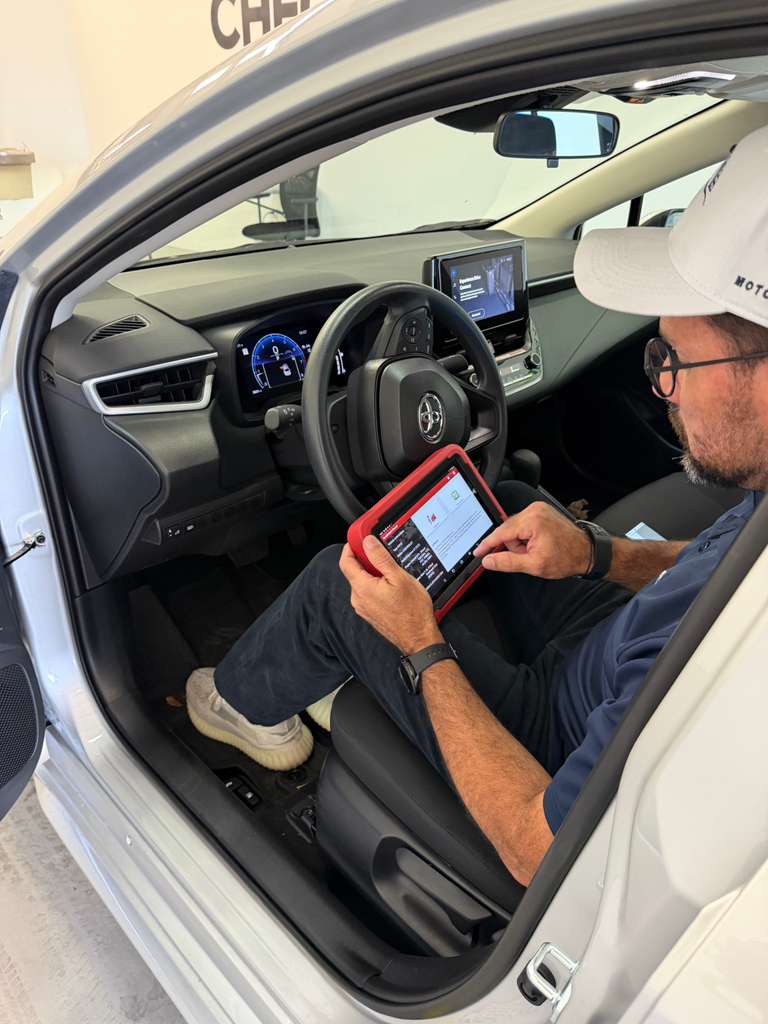
Electronic fault codes. Modern cars run on onboard computers that log issues long before a dashboard light ever comes on, or after someone’s cleared it to hide a problem. Carfax has no access to that data. Only a direct OBD2 diagnostic scan can pull it.
Whether the VIN actually matches across the car. Chassis number, engine number, and the VIN on the door jamb should all match. A history report checks the VIN against records. It doesn’t check whether the physical VIN plates and stampings on the car itself are original or have been swapped.
What a Physical Pre-Purchase Inspection Actually Shows
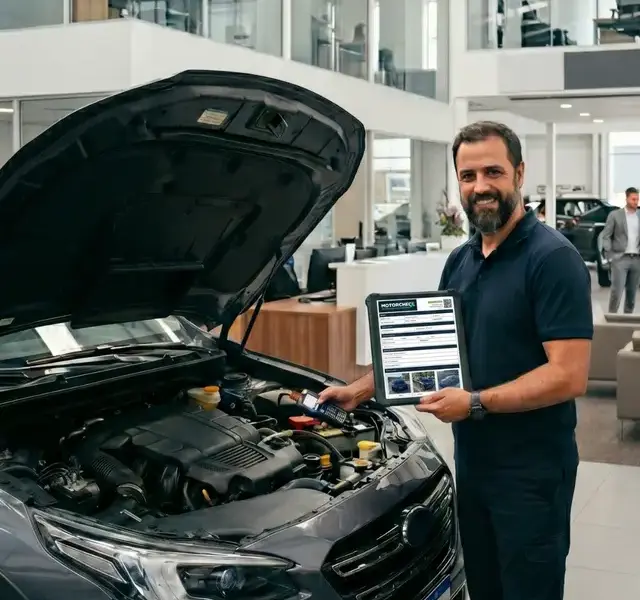
A hands-on inspection from a specialized inspector answers the question Carfax simply can’t: what is this car actually like right now.
A proper pre-purchase inspection covers:
- Structural components, panel by panel: pillars, sills, frame rails, strut towers, checked to confirm original, repaired, or replaced
- Paint and bodywork history on every exterior panel, not just the obvious ones
- OBD2 diagnostic scan for stored fault codes
- Electrical systems and accessories: power windows, locks, mirrors, AC, airbag system, and more
- VIN, engine number, and body identification tags, checked for consistency
- Tire and glass condition
- Confirmation that mandatory equipment and documents are actually present
This is where a paper trail and a trained set of eyes stop competing and start working together.
Why You Need Both, Not One or the Other
Carfax’s own data puts the number at close to 40% of vehicles on U.S. roads carrying some kind of damage in their past, around 110 million cars. That number cuts both ways. It tells you damage history is common enough to assume it’s possible on almost any used car you’re looking at. And it tells you why the report exists at all. Nobody’s arguing damage history doesn’t matter, Carfax’s own numbers prove it does. The real question is whether the report actually caught it, and whether whoever fixed it did the job right, panel by panel, structurally. That second part isn’t something any history report can answer, Carfax included. Only a physical inspection can answer that.
Think of it this way. Carfax tells you the story the car is willing to put on paper. A physical inspection tells you the story the car’s own structure and systems give up, whether it wants to or not.
A car can pass one of these and fail the other, which is exactly why leaning on just one leaves gaps:
- Clean Carfax, failed inspection: looks safe on paper, but a panel was swapped or a frame rail was repaired without ever getting reported
- Rough Carfax, strong inspection: a documented accident that was actually repaired correctly, structure intact, often priced better because of that same report
Buyers who only check Carfax are covered on paperwork, not on what’s actually under the paint or inside the computer. Buyers who only get an inspection know the car’s condition today, but not its full history. That’s exactly why a MotorCheck inspection already includes the Carfax history report as part of the service. You’re not buying one and then hunting down the other. One inspection delivers the documented history and the specialized inspector’s physical, panel-by-panel evaluation together, so nothing important gets left to guesswork before anyone signs anything.
Frequently Asked Questions
Does a clean Carfax report mean the car is safe to buy?
Not on its own. A clean report just means nothing turned up in what got reported. It says nothing about whether a panel was quietly repainted, whether the frame was repaired, or what’s stored in the car’s own diagnostic computer.
If a Carfax report shows an accident, should I avoid the car?
Not necessarily. A documented accident that was repaired correctly, with the structure intact, can still be a perfectly good car, and that same report often means the seller has to price it more competitively. A physical inspection is what actually confirms the repair held up.
Do I need to buy a Carfax report separately before booking a MotorCheck inspection?
No. The Carfax history report is already included in a MotorCheck inspection. You get the documented history and the physical, panel-by-panel evaluation in one single service, not two separate purchases.
How long does a pre-purchase inspection take?
Usually under an hour with a specialized inspector, and it can be scheduled before you commit to anything.
The Bottom Line
Buying a used car in Orlando shouldn’t come down to paperwork alone or a quick test drive alone. What happened to the car and what’s true about it today, structurally and electronically, are two different pieces of the same decision. MotorCheck exists to give buyers both, so nothing important gets left to chance.
Ready to know exactly what you’re buying? Schedule a MotorCheck inspection before you sign anything.